

Human trafficking is happening all around us, often in ways we don’t see. Millions of people, especially women and girls, are trapped in this cycle, with traffickers taking advantage of poverty and vulnerability. We can help fight back through awareness, education, and support for survivors.
Human Trafficking is more prevalent than you think
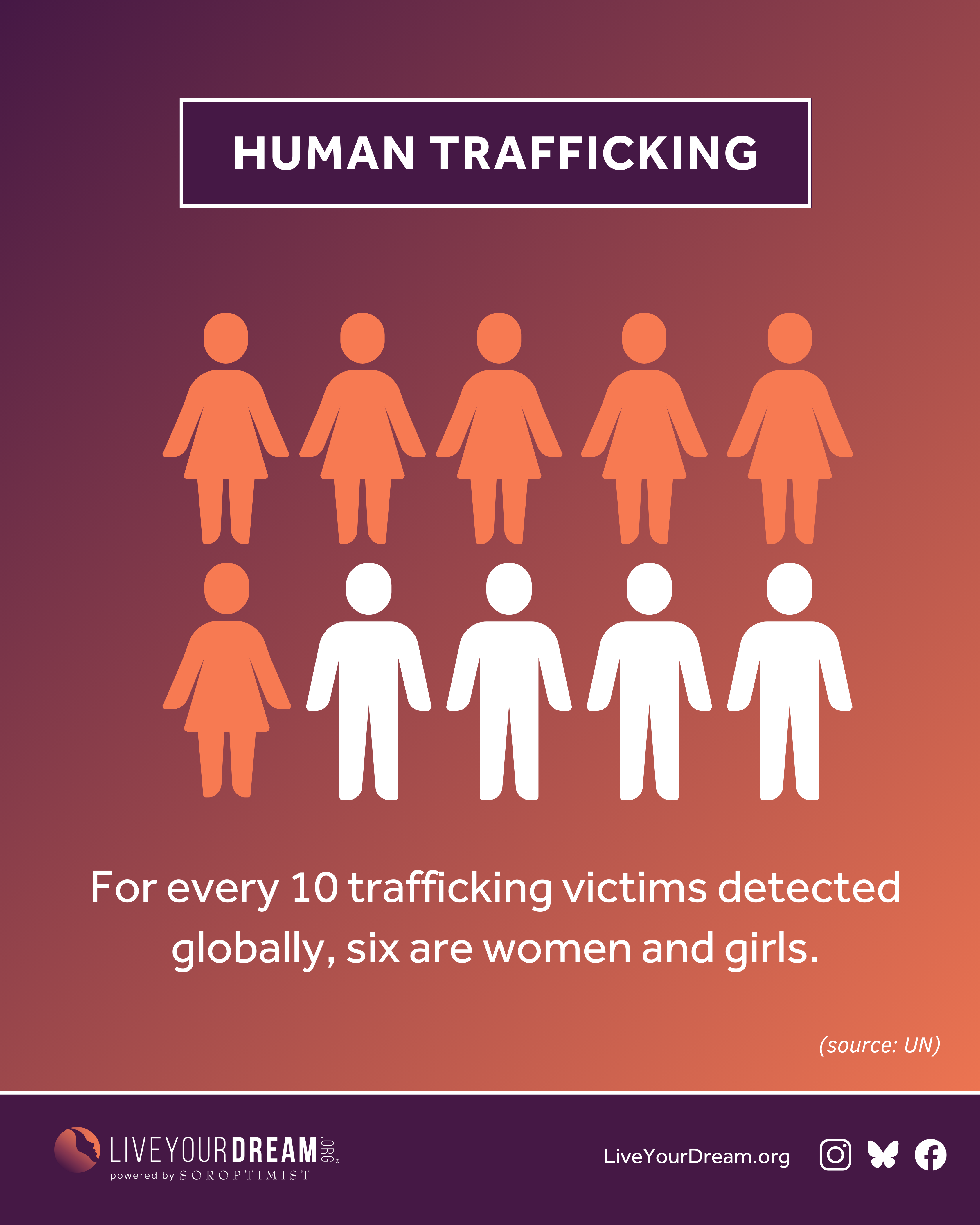
- Women and girls remain the largest share of detected trafficking victims worldwide. In 2022, they accounted for 61% of detected victims (39% women and 22% girls)—roughly 4 women and 2 girls for every 10 detected victims.
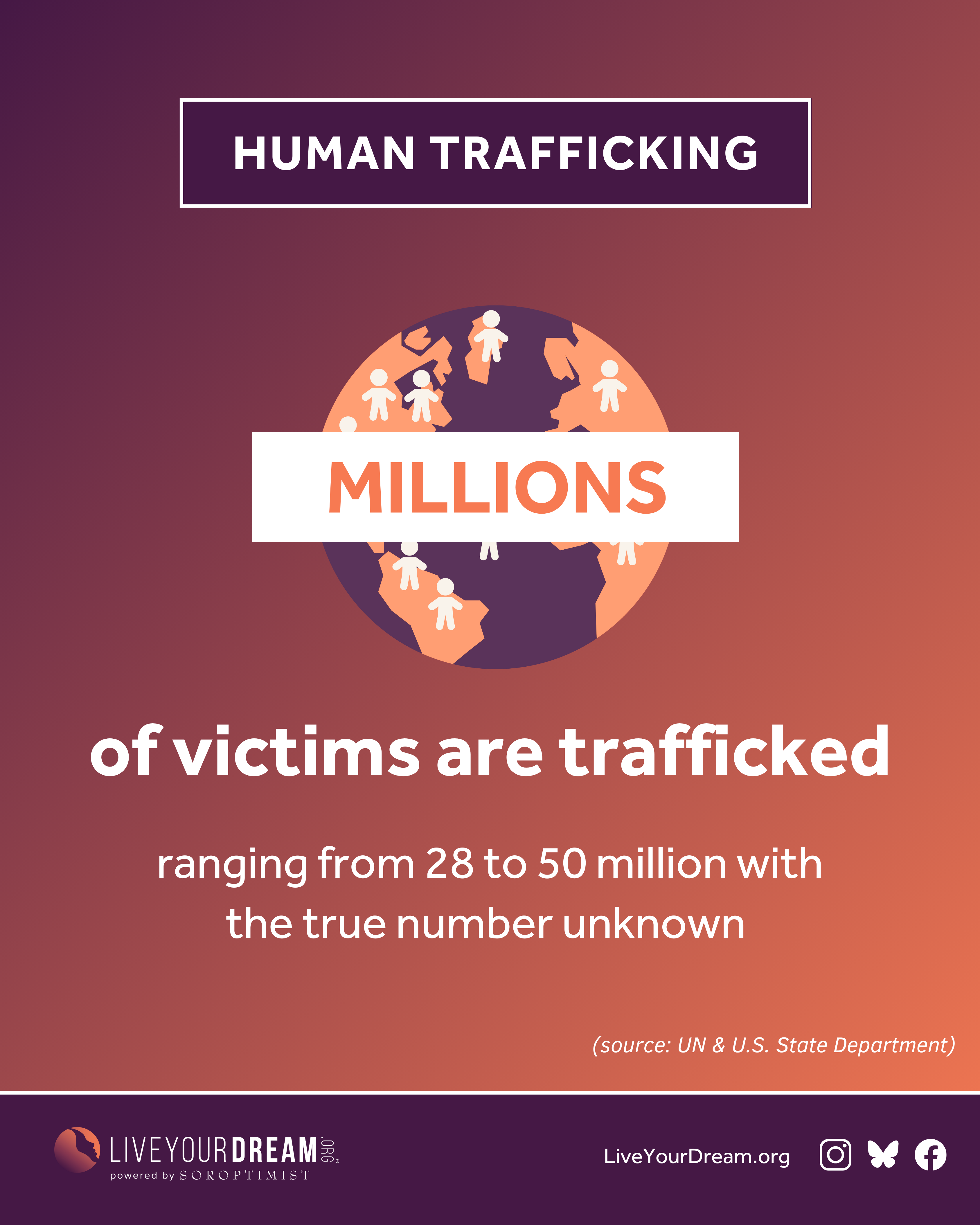
- The total number of trafficked individuals is unknown, but estimates range from 28 million to 50 million globally.
- Human trafficking and forced labor are now estimated to generate 236 billion in illegal profits annually (Source: ILO 2024 Report), making it one of the largest criminal enterprises globally.
The Impact of Human Trafficking
Human trafficking can happen to anyone, but some people are more vulnerable than others. Vulnerable groups include recent migrants, those with substance use/mental health illnesses, people with limited education, and individuals experiencing poverty or homelessness (especially youth). Traffickers may prey on these vulnerabilities to create a dependent relationship and make it more difficult for victims to leave. Most frequently, people are trafficked by someone they know and taken by manipulation rather than force. This manipulation and coercion often escalate to physical, emotional, and financial abuse.
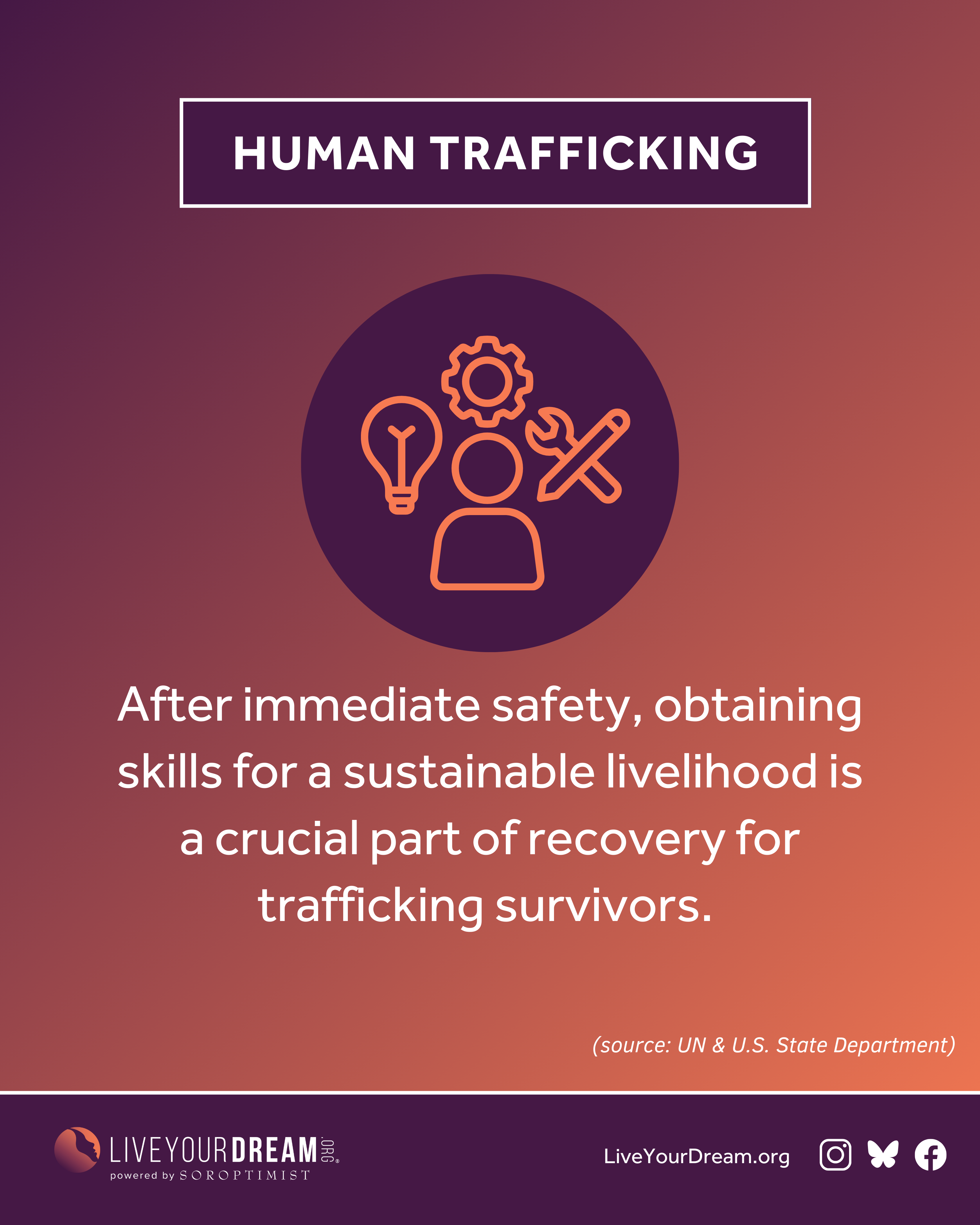
Once immediate safety is established, the UN states that “acquiring skills and competencies for sustainable livelihoods” is an intermediate need and a crucial part of a successful recovery for trafficked individuals. LiveYourDream.org/Soroptimist has decades of experience providing this intervention through our education awards and other financial support.
Women and girls who have been trafficked often suffer financially, being forced to rely on their trafficker or forced to turn over their earnings to their trafficker. Even after they escape and are safe, they often face unfair societal stigma that can make finding meaningful employment difficult.
How You Can Help
Reducing poverty is a powerful way to lower the risk of trafficking and education is a key pathway to doing just that. Access to formal education can provide women with the tools to prevent trafficking and to command better wages after surviving trafficking.
Leading organizations addressing trafficking agree that holistic methods are the best prevention. One of the most impactful preventative methods is to invest in building the agency of women and girls through access to education. Ensuring that women and girls have the opportunity and ability to complete school and earn a livelihood plays a significant role in reducing vulnerability.
Spread awareness about human trafficking on social media with these graphics!



Pledge to Support Trafficking Survivors
Want to make a difference in the lives of human trafficking survivors?Take the pledge to put an end to violence against women and girls! |